Fire Cider: Simple Winter Tonic, or a November Pantry Staple?

Every fall, the garden gives us its last bit of fire: horseradish root, the last hot peppers, garlic, and hardy herbs that shrug off the first frosts. This fall we decided to jar that fire and make some fire cider for the first time! Everything gets packed and covered in apple cider vinegar, steeped for about a month, and if all goes well, we'll have a tonic to keep on hand this winter.
In this post I'll explain what fire cider actually is, go through the facts and the myths as honestly as I can, and share the recipe we settled on - plus the bundle we put together here at the farm, for anyone who'd rather start with the gathering already done.
So which is it: a simple winter tonic, or a November pantry staple? Honestly, it's both - and that's exactly why we're making it.

What Fire Cider is
Fire cider is a folk tonic: pungent roots, garlic, hot peppers, and herbs steeped in raw apple cider vinegar for about a month, then strained and sweetened with honey. It's sweet, sour, spicy, and warming all at once. People take it by the spoonful, stir it into warm water with lemon, or use it like a condiment in salad dressings and marinades, or splash it over roasted vegetables. It lives right on the line between food and folk tradition, which is where we like our pantry staple to live.
A Short History
The tonic was created around 1979-80 by herbalist Rosemary Gladstar, working with a group of students at the California School of Herbal Studies as a teaching project. Fire cider is younger than it tastes. The idea was to bring herbalism back into people's kitchens - as part of their food, not just as medicine. She wanted it low-cost, simple, and delicious: "just the right amount of sweet, spicy, sour, and pungent." The name is a nod to the taste - fire for the heat, cider for the vinegar.
Gladstar taught it everywhere she went, and she wanted it to spread and change as it traveled. It did. Then in 2012, a company trademarked the name "fire cider" and began sending cease-and-desist letters to small herbalists selling their own. The herbal community pushed back under the banner "Tradition Not Trademark," and in 2019 a federal court ruled that "fire cider" had been a generic term all along - like trying to trademark "pizza." The trademark was cancelled. As Gladstar put it: "It's a people's medicine. That's what herbalism is." We like knowing our jar sits in that tradition: nobody owns it, and everybody's welcome to make it.
Facts & Myths
Myth: It's an ancient recipe. Not quite. The name and recipe date to about 1979. But fire cider belongs to a much older family, the oxymels. They are vinegar-and-honey infusions used since the time of Hippocrates, around 400 BCE. The fairest way to say it: fire cider is a newer version of a very old idea.
Myth: It has to burn to work. No. The heat is adjustable - this is folk cooking as much as folk medicine. Use fewer peppers or add more honey (honey is there partly to cool the heat), and you get a pleasant warming tonic instead of a dare.
Fact: Honey really does help a cough. This one's actually been studied. When researchers pooled the clinical trials (a Cochrane review), honey eased cough symptoms better than no treatment or a placebo, and about as well as common cough medicines. It's the best-tested ingredient in the jar, which is why it goes in raw, after straining. (If you can find raw honey, any honey will do as long as it's pure)
Myth: There's one true recipe. There isn't. Gladstar herself admits she never measures: "Instead of a measuring cup or a tablespoon, I use a 'measuring hand.'" The template is vinegar, pungent roots, heat, and honey; everything else is the maker's fingerprint. The version below is ours - cranberries for a northern touch, and our own garden horseradish as the star.
Fact: The vinegar does the preserving. The apple cider vinegar isn't just there for tang. Its acidity is what keeps the jar safe through a month of steeping on the counter; it's the same principle behind pickling, and it's why the daily shake matters: everything needs to stay under the vinegar line.
"It's just woo." Let's be straight: fire cider as a whole has never been put through clinical trials, and we won't pretend otherwise. What we can say honestly is that it's a potent, flavorful food made from real ingredients with a long folk record behind it- crushed garlic, hot peppers, citrus, horseradish, and honey, at least, have genuinely strong evidence behind it for soothing coughs. We make it because it's delicious, warming, and a good use for what the garden gives us in the fall. That's enough for us.
The Sunrise Hollow Bundle
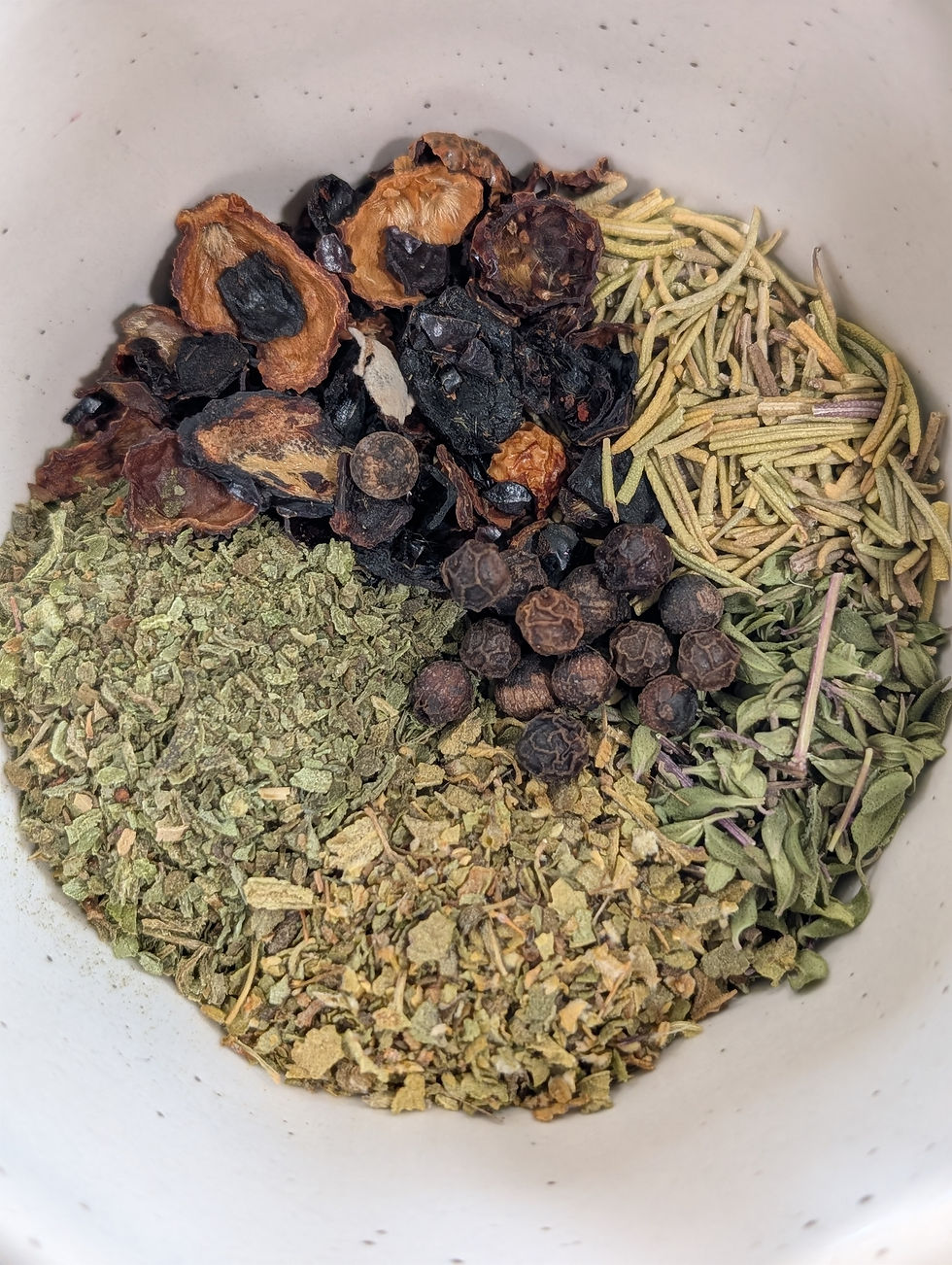
Our Fire Cider Bundle contains: horseradish root, garlic, hot peppers, rosemary + herbs. The herbs come as a dried blend already portioned out and ready to use in a quart-sized jar.
The fresh items are vacuum-sealed and frozen whole, so they keep their fire until you're ready. One thing we do on purpose is keep the horseradish root whole. A whole root keeps its punch sealed inside until the moment you grate it - and grating it straight from frozen is actually the easiest way to do it. (An herbalist's pro tip: grate it frozen in a food processor, and open a window. The fumes are famously strong.)
Bundles are ready to purchase in November, just at the right time for you to have a bottle ready by the time deep winter sets in, in December. It's also the perfect time to grab some fresh sourdough from our farm!!
Fire Cider the Sunrise Hollow Way (one quart)
From our bundle:
Horseradish root - 2-3 oz, grated (unpeeled is fine)
Garlic - 1 whole head, peeled, cloves smashed or chopped
Hot peppers - 4-5, sliced
Dried herbs - use the whole pack.
6-10 whole peppercorns
1 tsp rosemary
1 tsp thyme
1 tsp oregano
2 tsp rose hips
1 tsp lemongrass
1 tsp basil

You add:
Fresh ginger - 3 oz grated
Cranberries - 6 oz, halved.
Citrus - 1/2 of each (lemon, lime, orange), quartered or sliced
Cinnamon sticks - 2-3
Raw apple cider vinegar - about 2 cups, or enough to cover everything (make your own here)
Raw honey - about 3 oz, stirred in after straining (if you can't find raw honey, any will do as long as it's pure)
Steps:
Grate the horseradish (straight from frozen is easiest) and the ginger.
Peel and smash or chop the garlic. Let sit for about 10 min, then add to the jar. (This gives garlic time to form allicin)
Slice the peppers (keep the seeds).
Halve the cranberries.
Quarter or slice the citrus.
Put everything solid - including the whole herb pouch, cinnamon sticks, and peppercorns - into a clean quart-sized jar.
Pour the apple cider vinegar over it all until everything is fully submerged (Some things will float). If your lid is metal, lay a piece of parchment paper under it - vinegar will corrode metal, and the parchment keeps the lid and the flavor clean.
Set the jar in a cool, dark spot for 4 weeks, and give it a shake every day. The daily shake matters: it keeps everything under the vinegar line.
Strain through cheesecloth, squeezing the pulp hard to get every last drop.
Stir in the honey. Refrigerate, and enjoy by the spoonful or stirred into warm water.

Zero-waste bonus: Don't toss the strained solids. Dehydrate them and grind into a sweet-tart fire cider seasoning for cooking or pack the powder into capsules.
Does it ever go bad? It's vinegar - effectively self-preserving. Reports range from 6 months to 18 months to "indefinite," unrefrigerated in a cool, dark place; refrigeration is optional but recommended for flavor. Honeyless versions keep less, around 3 months per one source. If anything above the vinegar line molded during steeping, that batch is suspect; strained and sealed, it's fine.
Dosage lore: 1-2 tbsps. daily maintenance in cold season; more at onset; in warm water with lemon - or just as a shot.
That's the whole story: a jar of the garden's last fire to keep us warm through winter, a month of patience, and a tonic that's ready when winter is. If you make a batch - from one of our bundles or your own version - we'd love to hear how yours turned out in the comments. See you in November!!

Comments